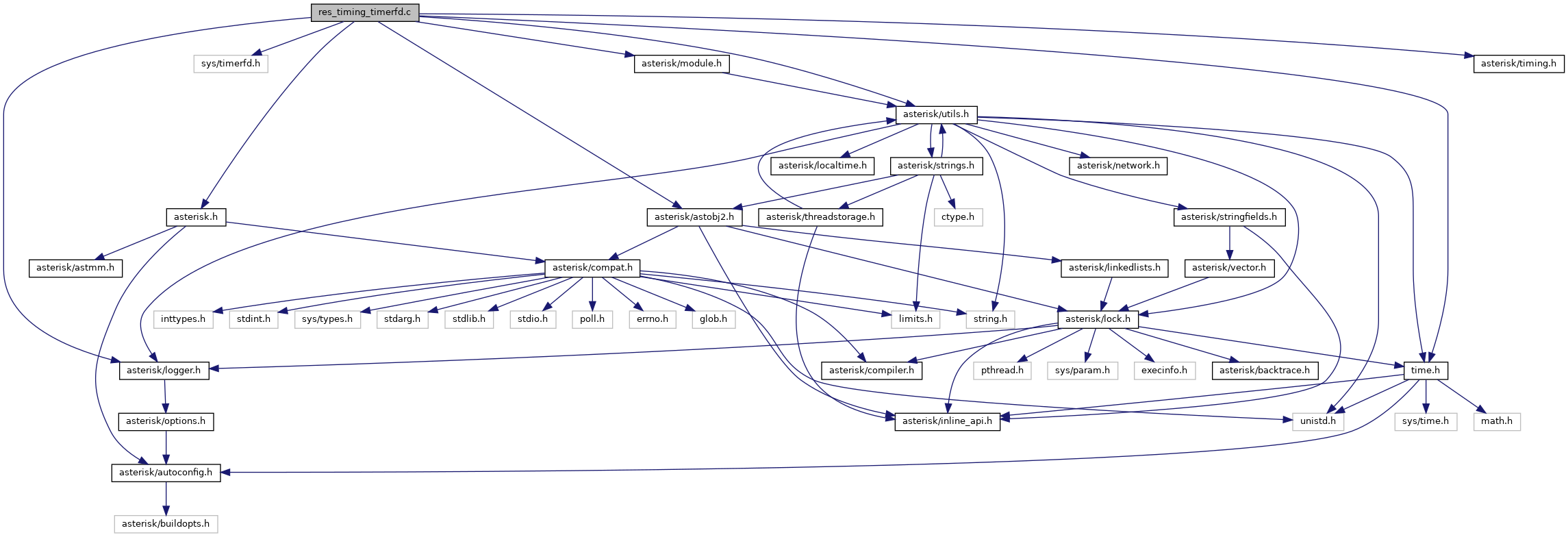
timerfd timing interface
More...
Go to the source code of this file.
◆ TIMERFD_MAX_RATE
| #define TIMERFD_MAX_RATE 1000 |
◆ __reg_module()
| static void __reg_module |
( |
void |
| ) |
|
|
static |
◆ __unreg_module()
| static void __unreg_module |
( |
void |
| ) |
|
|
static |
◆ AST_MODULE_SELF_SYM()
◆ load_module()
| static int load_module |
( |
void |
| ) |
|
|
static |
Definition at line 251 of file res_timing_timerfd.c.
252{
253 int fd;
254
255
256 if ((fd = timerfd_create(CLOCK_MONOTONIC, 0)) < 0) {
257 ast_log(
LOG_ERROR,
"timerfd_create() not supported by the kernel. Not loading.\n");
259 }
260
261 close(fd);
262
265 }
266
268}
@ AST_MODULE_LOAD_SUCCESS
@ AST_MODULE_LOAD_DECLINE
Module has failed to load, may be in an inconsistent state.
static struct ast_timing_interface timerfd_timing
static void * timing_funcs_handle
#define ast_register_timing_interface(i)
Register a set of timing functions.
References ast_log, AST_MODULE_LOAD_DECLINE, AST_MODULE_LOAD_SUCCESS, ast_register_timing_interface, timerfd_timer::fd, LOG_ERROR, timerfd_timing, and timing_funcs_handle.
◆ timer_destroy()
| static void timer_destroy |
( |
void * |
obj | ) |
|
|
static |
◆ timerfd_timer_ack()
| static int timerfd_timer_ack |
( |
void * |
data, |
|
|
unsigned int |
quantity |
|
) |
| |
|
static |
Definition at line 127 of file res_timing_timerfd.c.
128{
130 uint64_t expirations;
131 int read_result = 0;
132 int res = 0;
133
135
136 do {
137 struct itimerspec timer_status;
138
139 if (timerfd_gettime(
timer->fd, &timer_status)) {
141 expirations = 0;
142 res = -1;
143 break;
144 }
145
146 if (timer_status.it_value.tv_sec == 0 && timer_status.it_value.tv_nsec == 0) {
147 ast_debug(1,
"Avoiding read on disarmed timerfd %d\n",
timer->fd);
148 expirations = 0;
149 break;
150 }
151
152 read_result = read(
timer->fd, &expirations,
sizeof(expirations));
153 if (read_result == -1) {
155 continue;
156 } else {
158 res = -1;
159 break;
160 }
161 }
162 } while (read_result != sizeof(expirations));
163
165
166 if (expirations != quantity) {
167 ast_debug(2,
"Expected to acknowledge %u ticks but got %llu instead\n", quantity, (
unsigned long long) expirations);
168 }
169
170 return res;
171}
#define ast_debug(level,...)
Log a DEBUG message.
References ao2_lock, ao2_unlock, ast_debug, ast_log, errno, LOG_ERROR, and timer.
◆ timerfd_timer_close()
| static void timerfd_timer_close |
( |
void * |
data | ) |
|
|
static |
Definition at line 101 of file res_timing_timerfd.c.
102{
104}
#define ao2_ref(o, delta)
Reference/unreference an object and return the old refcount.
References ao2_ref.
◆ timerfd_timer_disable_continuous()
| static int timerfd_timer_disable_continuous |
( |
void * |
data | ) |
|
|
static |
◆ timerfd_timer_enable_continuous()
| static int timerfd_timer_enable_continuous |
( |
void * |
data | ) |
|
|
static |
Definition at line 173 of file res_timing_timerfd.c.
174{
176 int res;
177 static const struct itimerspec continuous_timer = {
178 .it_value.tv_nsec = 1L,
179 };
180
182
183 if (
timer->is_continuous) {
184
185
186
188 return 0;
189 }
190
191 res = timerfd_settime(
timer->fd, 0, &continuous_timer, &
timer->saved_timer);
192 timer->is_continuous = 1;
194
195 return res;
196}
References ao2_lock, ao2_unlock, and timer.
◆ timerfd_timer_fd()
| static int timerfd_timer_fd |
( |
void * |
data | ) |
|
|
static |
◆ timerfd_timer_get_event()
◆ timerfd_timer_get_max_rate()
| static unsigned int timerfd_timer_get_max_rate |
( |
void * |
data | ) |
|
|
static |
◆ timerfd_timer_open()
| static void * timerfd_timer_open |
( |
void |
| ) |
|
|
static |
Definition at line 84 of file res_timing_timerfd.c.
85{
87
89 ast_log(
LOG_ERROR,
"Could not allocate memory for timerfd_timer structure\n");
91 }
92 if ((
timer->fd = timerfd_create(CLOCK_MONOTONIC, 0)) < 0) {
96 }
97
99}
#define ao2_alloc(data_size, destructor_fn)
static void timer_destroy(void *obj)
References ao2_alloc, ao2_ref, ast_log, errno, LOG_ERROR, NULL, timer, and timer_destroy().
◆ timerfd_timer_set_rate()
| static int timerfd_timer_set_rate |
( |
void * |
data, |
|
|
unsigned int |
rate |
|
) |
| |
|
static |
Definition at line 106 of file res_timing_timerfd.c.
107{
109 int res = 0;
110
112
113 timer->saved_timer.it_value.tv_sec = 0;
114 timer->saved_timer.it_value.tv_nsec = rate ? (long) (1000000000 / rate) : 0L;
115 timer->saved_timer.it_interval.tv_sec =
timer->saved_timer.it_value.tv_sec;
116 timer->saved_timer.it_interval.tv_nsec =
timer->saved_timer.it_value.tv_nsec;
117
118 if (!
timer->is_continuous) {
120 }
121
123
124 return res;
125}
References ao2_lock, ao2_unlock, NULL, and timer.
◆ unload_module()
| static int unload_module |
( |
void |
| ) |
|
|
static |
◆ __mod_info
◆ ast_module_info
◆ timerfd_timing
Definition at line 54 of file res_timing_timerfd.c.
54 {
55 .name = "timerfd",
56 .priority = 200,
66};
static int timerfd_timer_enable_continuous(void *data)
static int timerfd_timer_disable_continuous(void *data)
static unsigned int timerfd_timer_get_max_rate(void *data)
static enum ast_timer_event timerfd_timer_get_event(void *data)
static int timerfd_timer_ack(void *data, unsigned int quantity)
static void timerfd_timer_close(void *data)
static int timerfd_timer_fd(void *data)
static void * timerfd_timer_open(void)
static int timerfd_timer_set_rate(void *data, unsigned int rate)
Referenced by load_module().
◆ timing_funcs_handle
| void* timing_funcs_handle |
|
static |